
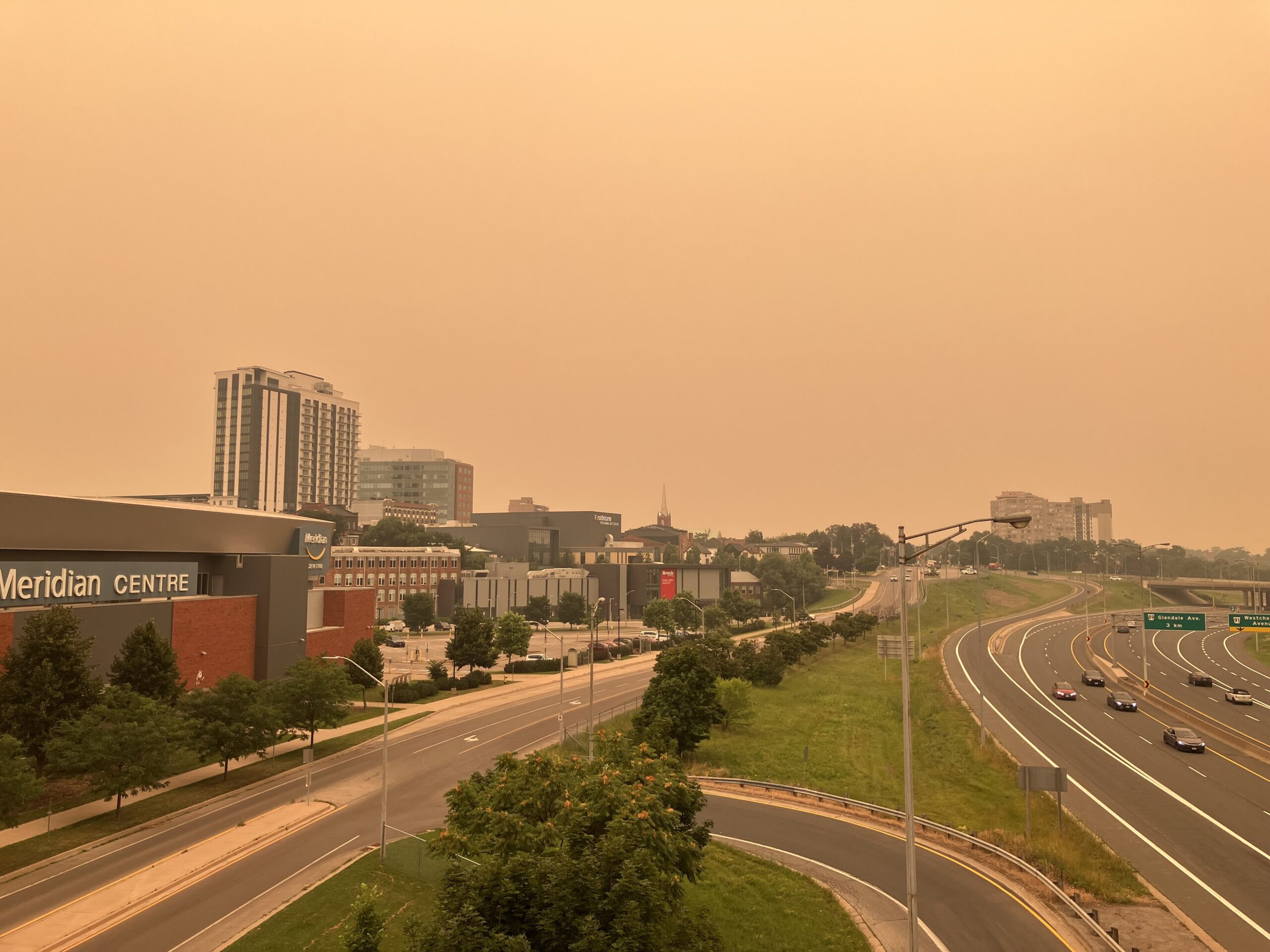
Toronto, ON – As Canadians witness another devastating wildfire season, with communities across Northern Ontario threatened by out-of-control fires, transit advocates from across the country are urging the federal government to make a fundamental shift in its climate priorities by investing in public transit instead of expanding fossil fuel infrastructure.
Organizations representing riders in Toronto, Vancouver, and Edmonton say Canada cannot meet its climate commitments while continuing to prioritize pipelines over the public transit systems that millions of Canadians depend on every day.
Transportation is Canada’s second largest source of greenhouse gas emissions, and passenger vehicles account for the vast majority of those emissions. Expanding and improving public transit gives Canadians a practical alternative to driving, reducing congestion, lowering emissions and making cities more affordable.
Canadians are watching in real time communities displaced and families forced from their homes because of wildfires in Northern Ontario,” said Andrew Pulsifer, Executive Director of TTCriders. “Toronto has recently had the worst air quality in the world because of those wildfires, and while no single solution will solve this crisis, we know that making public transit a national priority can make a real difference.”
Meanwhile, transit service has been shrinking on a per-capita basis in many Canadian cities. Existing riders have had to deal with long wait times and crowding. As for motorists who wish they had an alternative, they haven’t been offered much hope that quality transit will finally serve them.
The organizations are calling on the federal government to restore and expand-long term funding for public transit systems across Canada. This will allow municipalities to grow ridership and reduce dependence on private vehicles. This includes restoring the $5 billion cut from the Canada Public Transit Fund, providing stable operating transit funding to municipalities and recognizing public transit as climate infrastructure in future federal budgets.
“Public transit is one of the most effective climate investments governments can make,” said Denis Agar, Executive Director of Vancouver’s Movement: Metro Vancouver Transit Riders. “We at Movement are fine with the government funding pipelines, but we only want to see the kind that have trains in them. That’s the move if we’re trying to reduce cost of living as well as pollution.”
“Communities across Canada are experiencing the impacts of climate change first hand,” said Emily Stremel, Chair of Edmonton Transit Riders. “Climate and transit policy cannot be separated. Investments in transit is one of the most practical, immediate steps the federal government can take to reduce emissions while improving the quality of life for millions of Canadians.”
As wildfires become more frequent and more destructive, the organizations argue that Canada’s climate response must focus on reducing emissions through sustained investments in public transit.
-30-
Andrew Pulsifer – Executive Director, TTCriders
Denis Agar – Executive Director, Movement: Metro Vancouver Transit Riders
Emily Stremel, Chair of Edmonton Transit Riders