
Better bus stops make a remarkable difference in the lives of transit users. As the population ages, installing shelters, benches, and crosswalks are more important than ever.
For Immediate Release
This weekend, the New York Times printed a long piece about volunteer-built bus benches in Nashville. Call the Times, because several bus stops in Metro Vancouver were newly graced with benches around the same time. These were built and installed by volunteers with the goal of shining a light on the need for better bus stops. We were once voted to have the sorriest bus stop in North America. That stop has since been partially fixed, but we have a long way to go to ensure all riders have a dignified place to wait.
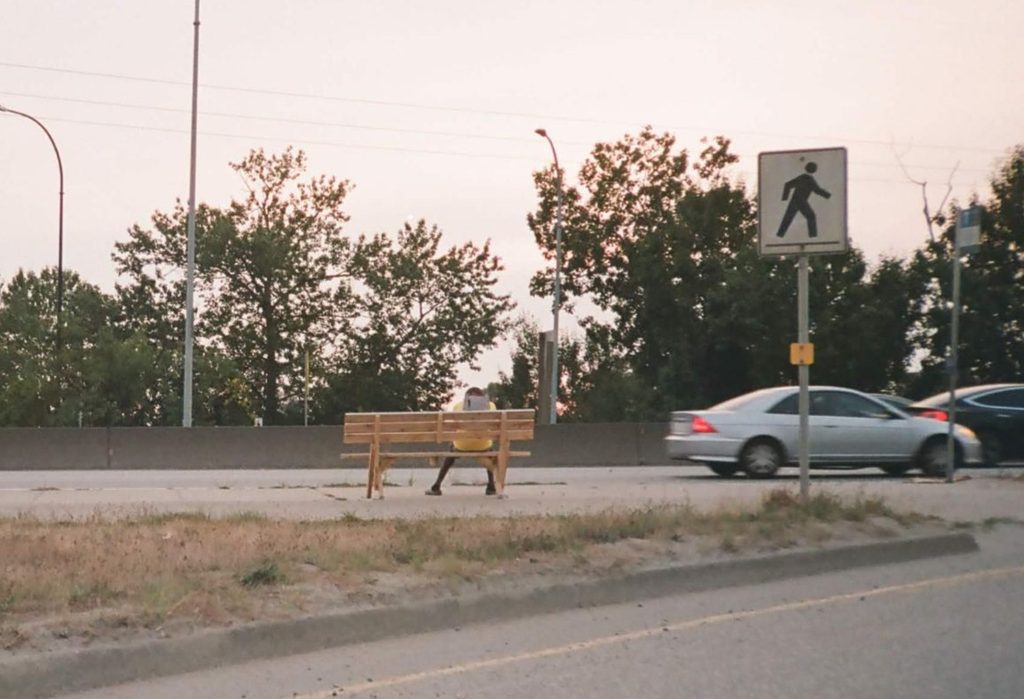
A new volunteer-built bench on Mitchell Island saw its first sitter literally minutes after being installed.
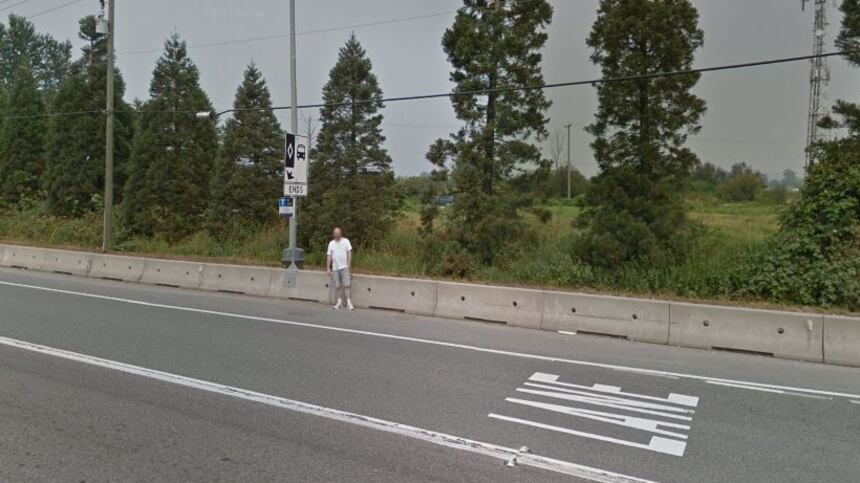
Where are the new benches?
- Vancouver:
- Westbound East 49th Av at St Catherines St (199 boardings/wkday)
- Eastbound Southeast Marine Dr at St George St (113 boardings/wkday)
- Eastbound Southeast Marine Dr at Manitoba St (240 boardings/wkday)
- Richmond:
- Northbound Knight St Bridge on Mitchell Island (49 boardings/wkday)
- Southbound Knight St Bridge on Mitchell Island (66 boardings/wkday)
What does Movement want?
We want bus stops to have a basic suite of amenities:
- Shelter
- Bench
- Wheelchair accessibility
- Overhead lighting
- A safe crosswalk nearby
We don’t have exact figures on which stops meet this standard. What we do know is that if every stop with over 50 boardings per weekday met this standard, 93% of transit riders would be covered. Based on 2024 data, that’s only 3210 out of the region’s 8300+ active bus stops (39%).
In addition, we want governments to have a plan that will quickly upgrade most stops to include that suite, including:
- Quickly moving shelters from closed stops to ones that need it
- (We know that Vancouver has dozens of shelters at disused stops that could easily be moved to stops that need them)
- Open data about the status of each stop
Why upgrade bus stops?
- It rains here.
In fact, we’re one of the rainiest cities in the country. It’s part of our identity. And when it’s not raining, shade can be urgently necessary. Transit riders shouldn’t have to get to work covered in either rain or sweat. - Not everyone can stand up for a 30-minute bus wait,
Including seniors, people with disabilities or chronic illness, people recovering from injury, parents with young children and anyone carrying groceries or other belongings. . Benches are a game changer for them. - It makes your waiting time feel shorter!
A study from the University of Minnesota asked transit riders to guess how much time they waited for the bus. If there was a shelter at the stop, they routinely estimated a shorter wait time. This has major implications for transit ridership growth – better bus stops make transit more attractive. - It costs so, so little
Compared to the transit projects that make the news, better bus stops cost next to nothing. A 2021 estimate in Burnaby was $30,000 for shelter, bench, and lighting. And of course, each shelter can generate ad revenue for the city.
Who is responsible for bus stops – TransLink?
No, not usually. Most bus stops are the responsibility of the municipality they’re in. That’s why they look different from one city to the next. TransLink only does the shelters for bus stops on their property, usually at bus exchanges and SkyTrain stations. A small amount of bus stops are on provincial property, meaning they are the responsibility of the Ministry of Transportation and Transit.
What do bus stops have to do with the municipal election?
Movement’s goals this election are twofold:
- Mobilize transit riders to vote, and
- share information with the region’s 1 million transit riders about which candidates have made promises that align with Movement’s priorities.
To that end, we’re asking candidates to take a pledge to support transit in seven ways. Here’s the one about bus stops:
Getting to and waiting for transit: I will increase investment in sidewalks, crosswalks, and street lighting and I will install many new bus shelters and benches, with the goal that almost all of my city’s stops have them.
Read more about our pledge for candidates here: Vancouver, Burnaby, Surrey, and Richmond, and a general Metro Vancouver pledge for other municipalities.
Which cities are currently doing the best job?
Burnaby! A report to council in 2024 indicates that they’re installing about one new shelter and bench every week, until 2030.
Delta also deserves some credit for spending $750,000 this year on sprucing up some of their worst bus stops, especially in industrial areas which are seeing far higher ridership than they have before. Riders using these stops are the lifeblood of logistics hubs like Fedex and Amazon, and they’re finally going to get a dignified place to sit.
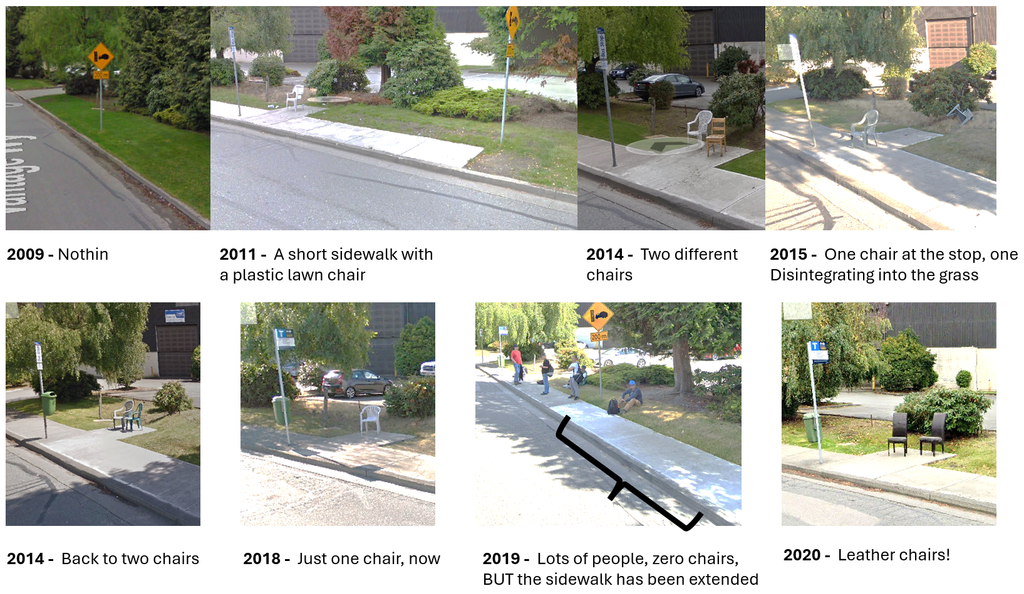
The saga of one bus stop in Delta – Eastbound Vantage Way at 76 Street. Funds have been allocated to install a shelter and bench here.
Data about shelters is so hard to gather online for 23 individual jurisdictions, so if you think a certain municipality isn’t getting the credit it deserves, please let us know!
Will these benches obstruct the sidewalk or cause accessibility issues?
The volunteers installing these benches have followed TransLink’s Bus Infrastructure Design Guidelines’s Appendix F which indicates where benches should be to ensure people using mobility devices can still access and circulate around the stop.
Where are the busiest bus stops that are missing benches?
Many thanks to the people that make Transit app, who back in February, published data on the stops that are in greatest need of benches. Their app asks riders if their stops have benches, shelters, etc, and offer a realtime snapshot of where the need is the greatest. For example, their user-generated data suggests that 61% of bus boardings happen at stops where there is already a bench (those are rookie numbers – as we mentioned above, only 39% of stops serve 93% of transit riders).
Many of the highest ranking stops in Transit app’s analysis were along the Surrey-Langley SkyTrain and Broadway Subway construction, where temporary stops are often missing benches. We’ve shared this feedback with the project team and want to see them do better.
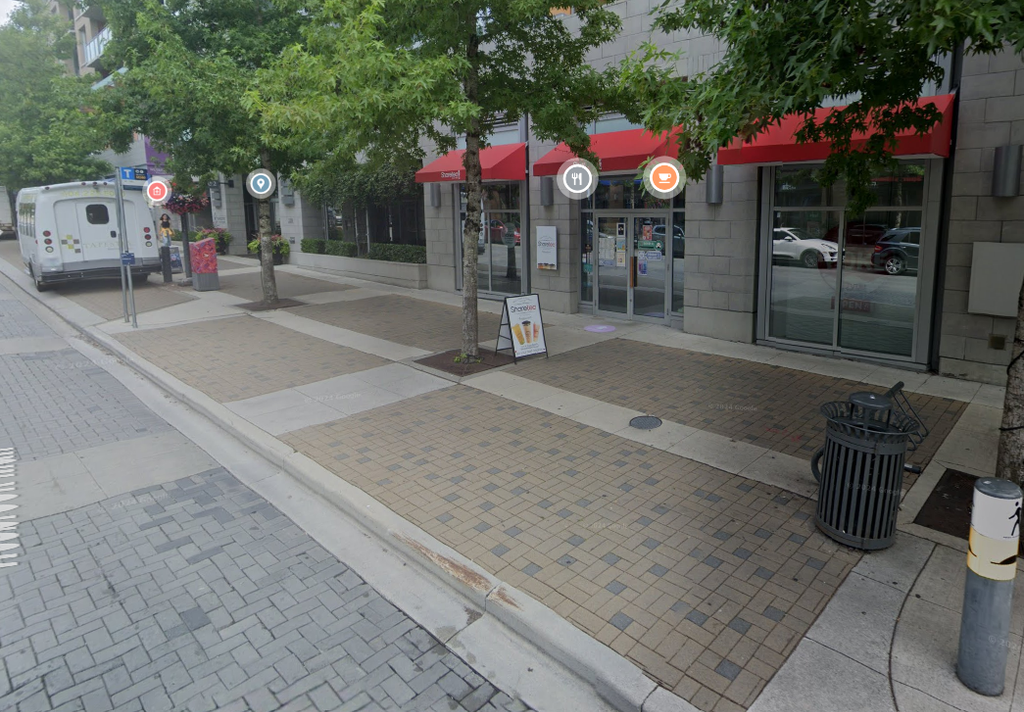
| One of the busiest stops in the region with no bench, on northbound Wesbrook Mall at Birney. In Fall 2024, an average 1562 people boarded here each weekday. The responsibility to add a bench and/or shelter lies with UBC. |
Contact
Denis Agar
Executive Director
778-776-8806
denis.agar@movementyvr.ca
http://movementyvr.ca
Movement: Metro Vancouver Transit Riders is a non-profit that represents our region’s one million transit riders. We’ve often been left out of the conversation, and we’re here to speak up for faster, more reliable, more abundant transit. We’re focused on the growing number of bus routes where riders are left behind by full buses, day after day, primarily in Surrey and South Vancouver, as well as the urgent need for bus lanes that cost almost nothing but massively improve commutes for hundreds of thousands of people.