With smart transit projects, governments can make buses faster and more reliable than cars in a matter of months. Compared to spending billions of dollars and waiting decades on a new crossing, fast, frequent, and reliable transit is the clear winner.
For Immediate Release
April 19, 2026
Recently released traffic data confirmed that the Ironworkers Memorial Bridge (Second Narrows Bridge) is the most congested crossing in Metro Vancouver.
This data reinforces the need for better transit service connecting the North Shore with the rest of the region to avoid suffocating congestion. Improving transit access to the North Shore is the only way to reduce traffic on the Ironworkers Memorial Bridge without waiting decades for a new crossing that would cost billions.
In 2025, the Ironworkers Memorial Bridge carried an average of 130,700 vehicles per day, with traffic expected to worsen in the years to come. The numbers support what North Shore residents and businesses have been saying for years—that congestion from bridge traffic is a serious problem, frequently spilling over into surrounding neighbourhoods, hindering access to the North Shore.
Highway 1 and the Ironworkers Memorial Bridge is a critical corridor for goods movement, connecting Metro Vancouver with the Sea to Sky, Vancouver Island, the Fraser Valley, and beyond. Bumper-to-bumper traffic, exacerbated by frequent bridge shutdowns from near-daily crashes, is costing businesses and families millions in hours wasted stuck in traffic.
Combined with the significant carbon and pollutant emissions from congestion and the limited opportunities for those on the North Shore and around the region due unreliable access, it’s clear that a solution is needed, and needed now.
The solution can be rolled out in a matter of months: better public transit.
Transit is already essential to tens of thousands of Metro Vancouverites crossing the Burrard Inlet every day. Ridership is growing, and so is the demand for faster, more frequent, and more reliable transit over the Ironworkers Memorial Bridge.
Buses crossing the Ironworkers Memorial Bridge carried over 6.4 million people in 2022, and grew over 22% by 2024, carrying nearly 7.9 million people. On an average weekday in 2024, buses crossing the bridge carried over 25,000 on an average weekday, equivalent to more than 13% of the North Shore’s population. The 130 bus, connecting the North Shore at Phibbs Exchange with Metrotown is the 20th busiest route in the entire system, carrying more than 3.2 million passengers in 2024.
Imagine if 25,000 more cars crowded onto the Ironworkers Memorial Bridge every day.
Even without including the tens of thousands of people moved by the SeaBus and buses crossing the Lions Gate Bridge, it’s clear that transit is already well used to the North Shore, and investments in transit service will be welcomed by reluctant drivers desperate for a more affordable commute amidst sky-high gas prices.
The buses that cross the bridge, each carrying dozens of people, are too often delayed from being stuck in traffic. Without faster, more frequent, and more reliable buses, transit will be too slow, too unreliable to get enough cars off the road to reduce bridge traffic.
Better transit is coming to the Second Narrows in September, but there’s a catch…
TransLink recently fast-tracked the R2 RapidBus extension over the Ironworkers Memorial Bridge to serve Burnaby Heights, Brentwood, BCIT, and Metrotown.
The R2 RapidBus currently connects Park Royal, Lonsdale Quay, and Phibbs Exchange with express service throughout the day, every day. This service expansion will connect the North Shore and the rest of the region with high-capacity, articulated buses departing every 6-7 minutes in peak hours, providing fast express service throughout the day.
The R2 RapidBus will provide much-needed additional capacity to the overcrowded and slow 130 bus, and replace the weekday peak-only 222, expanding express service to weekends. This will hopefully put an end to commuters forced to pay for Ubers after the bus passes them by with the sign “SORRY BUS FULL”.
Some parts of this route have transit priority infrastructure that help buses move faster than cars. There are queue jumps and bus lanes at Park Royal, a bus-only signal at Lonsdale Quay, and HOV lanes on stretches of Willingdon.
However, key bottlenecks go unaddressed.
The silver lining is that TransLink is already planning the next phase of upgrades. The Metrotown-North Shore Bus Rapid Transit (BRT) would replace the R2, and presumably have vastly upgraded transit priority measures (we haven’t seen the design so we can’t know for sure yet).
The BRT will improve rapid transit access to 85,000 families and 100,000 jobs, and reduce congestion on the Ironworkers Memorial Bridge by taking thousands of vehicles off the road every day.
Not only will transit riders have shorter commutes with buses that show up on time, or those who need to drive have to deal with less bumper-to-bumper traffic, but also support the trucking industry, which is the backbone of the region’s economy.
“A robust public transportation system benefits the trucking industry by promoting a fluid supply chain, alleviating traffic congestion, and ensuring predictable times,” says the British Columbia Trucking Association.
But yet again, there’s a caveat: neither the provincial nor federal governments have committed to funding this project, as well as many other worthwhile transit expansions. Furthermore, TransLink is facing yet another funding gap caused primarily by a drop in gasoline sales and inflationary cost increases.
This BRT is a worthwhile investment. Upcoming improvements to connections from the North Shore to the rest of the Lower Mainland will reduce congestion on the Ironworkers Memorial Bridge quickly and affordably, and do not require years of study, decades of construction, and billions of dollars.
What specific actions do we want to see?
Buses crossing the Ironworkers Memorial Bridge are seriously delayed at the on-ramps, resulting in unreliable service and long travel times, especially when there’s a collision.
We are calling on the provincial government to implement a queue jump lane on the northbound and southbound approaches to the bridge to improve bus speed and reliability.
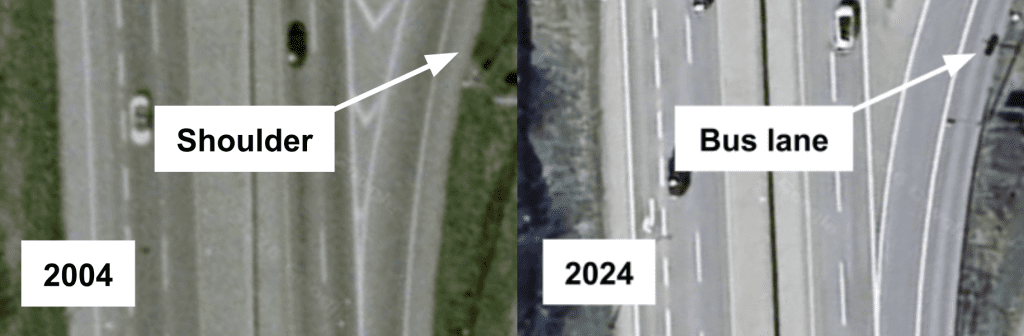
Queue jump lanes can be installed quickly and affordably, sometimes without laying any additional asphalt or concrete. The BC Ministry of Transportation and Transit (MOTT) has a strong track record of cost-effective solutions to transit priority. The shoulder bus only lane on the off-ramp from Highway 99 to Bridgeport Road in Richmond is an excellent example.
Furthermore, the Metrotown-North Shore BRT is not fully funded. We are calling on the provincial and federal governments to fully fund this desperately needed project. Although design work is in progress, the BRT line may never see the light of day without investment from higher levels of government. In Ontario, the provincial and federal governments fully funded two similar projects that will provide fast and reliable service in the near future. The North Shore and the rest of the region cannot afford to wait longer.
Amidst trade uncertainty with Canada’s largest trading partner, reducing costly congestion on the Ironworkers Memorial Bridge is key to bringing British Columbia’s and Canada’s products to the world to reinforce our local economy. The Metrotown-North Shore BRT is a fiscally responsible way to strengthen and diversify British Columbia and Canada’s economies.
“We only have to look at Los Angeles to see that more lanes create more congestion,” says Denis Agar, Executive Director. “A wider bridge would simply pour more cars into the North Shore’s already-overtaxed roads. Buses that are fast and reliable can take thousands of cars off that bridge—and that’s good not just for transit riders, but for those who continue to drive and for the movement of goods across the region.”
Read our previous article outlining six practical North Shore traffic solutions.
Media Contacts:
Er Jun Ma
Organizer
erjun.ma@movementyvr.ca
Denis Agar
Executive Director
778-776-8806
denis@movementyvr.ca
Appendix: How does a Queue Jump work?
You can see them in action at both ends of the Lions Gate bridge currently. Here’s how a queue jump could help at the south end of the Ironworkers Bridge.
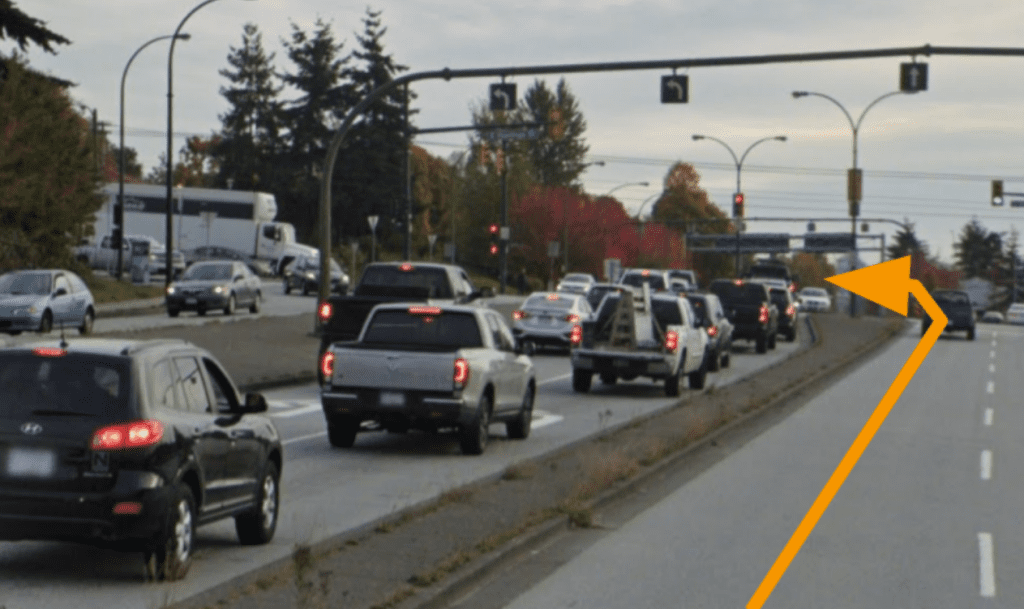
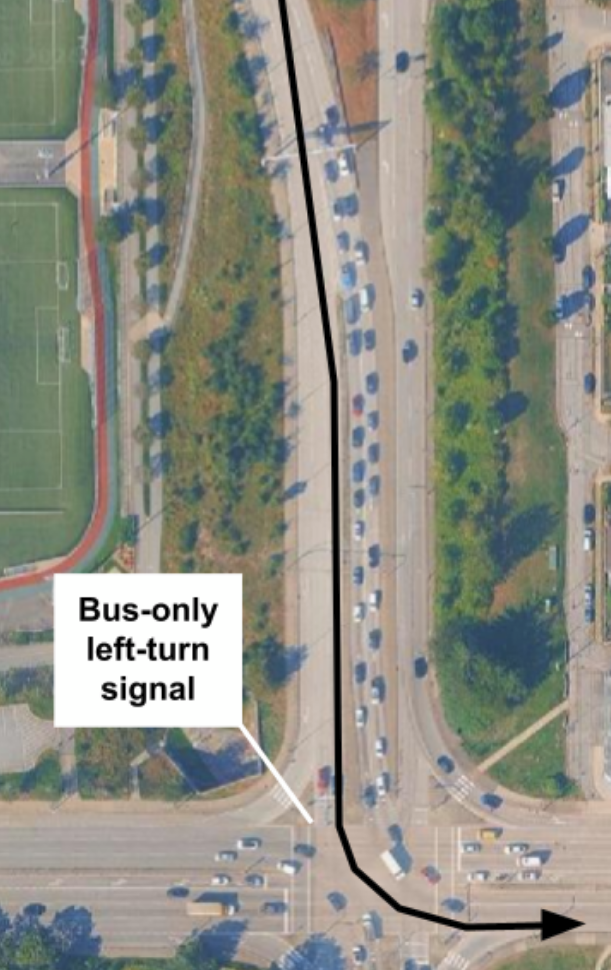
Pictured top-left is where the R2 RapidBus will turn left from the Cassiar Connector onto Hastings. The left turn lanes are often congested, as seen above, while the through lanes are usually clear. The MOTT could solve this problem by allowing buses to use the lanes on the right, and at the intersection, install a bus-only left turn signal so that buses can safely turn left onto Hastings. Pictured top-right is an aerial illustration of how long the queue of cars often is at this intersection, and how a signal can help buses get around it.
Travelling north from Hastings to the Ironworkers Bridge, there is sufficient width to add a bus-only lane that would be used only when traffic was moving slowly (similar to bus lanes on the Don Valley Parkway in Toronto, which are only used when traffic speeds are below 60 km/h).
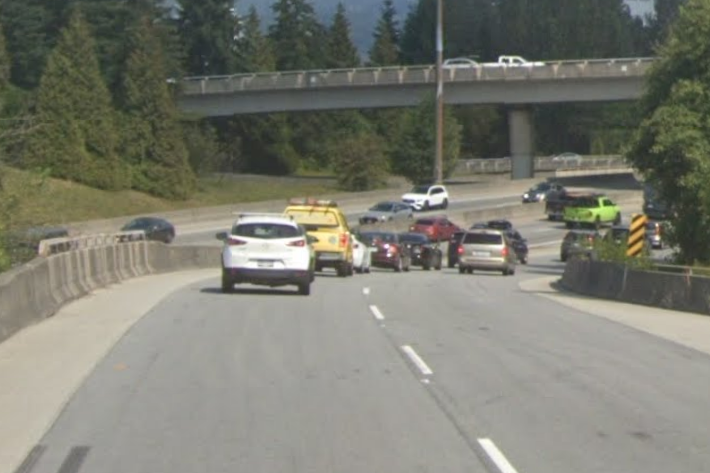
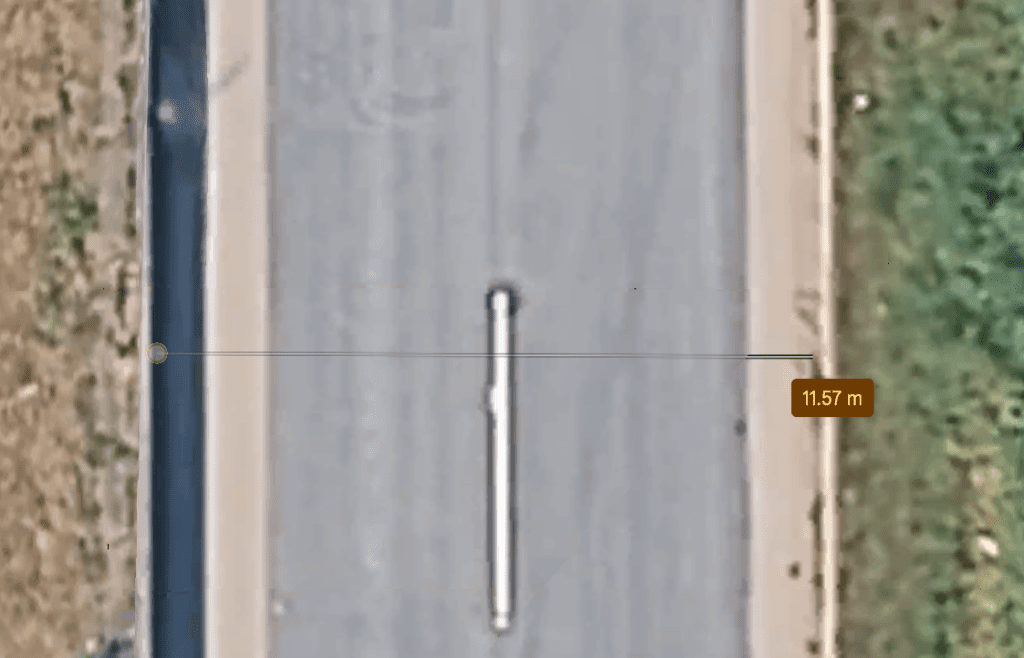
Pictured above is a rough measurement of the northbound Cassiar Connector, which indicates there’s 11.5 metres from curb to curb. This would allow for three 3.8 metre lanes, which is far greater than the minimum required in the context of a road with a maximum speed of 70 km/h.
The MOTT made a similar change on Highway 99 in Richmond in 2009. They narrowed a shoulder on the Bridgeport Road offramp in order to fit a bus lane. This small change has saved hundreds of thousands of hours of travel time for transit riders from Surrey, White Rock, and Delta in the 17 years it has been in operation.